Smart Touch Switches in Pakistan: When Glass Wall Plates Make Sense
26 Sep 2026 · ~10 min read · Concord Technologies
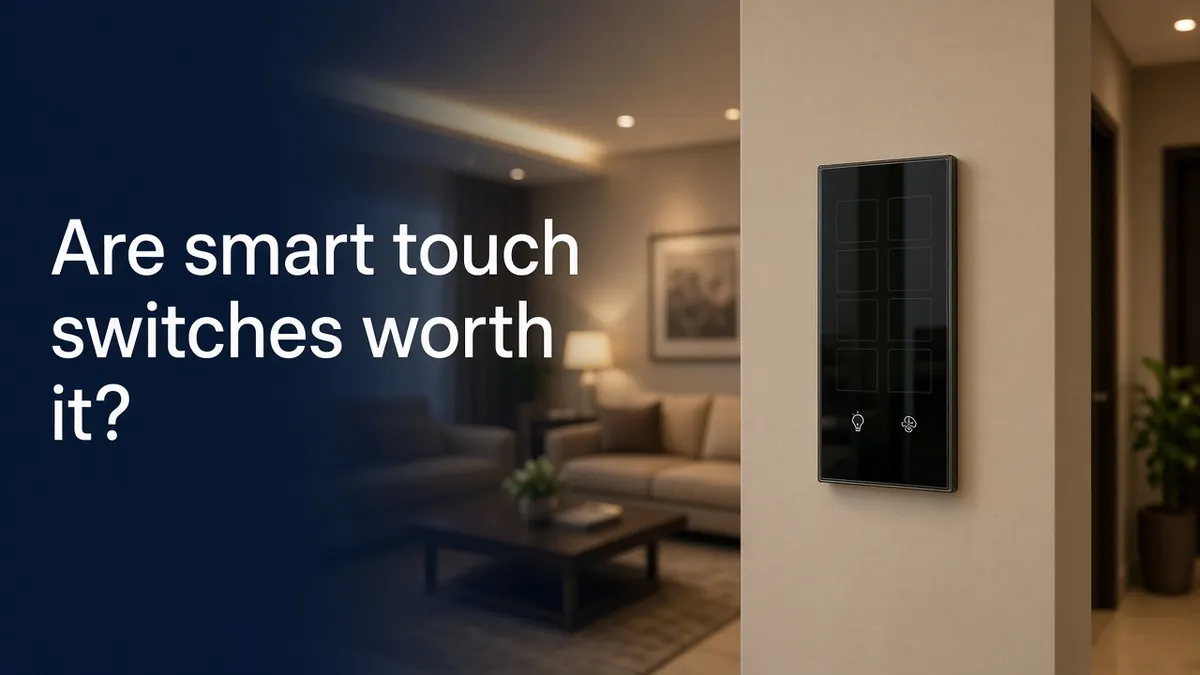
Smart touch switches replace ordinary rocker plates with glass or crystal panels you tap to control lights, fans, and sometimes sockets. In Pakistani homes they show up in searches for smart home switches, touch switch plate, wifi switch, and home automation wall panel. Done well, they clean up a cluttered gang box, add scenes, and let you control rooms from a phone when you are already upstairs. Done poorly, they flicker on cheap drivers, confuse guests, and die every time the UPS behaves oddly. This guide explains when they are worth fitting and what a survey should check. Product detail lives on our smart wall switch plates page.
A touch plate is still a switch first. Guests and staff should be able to turn a light on without opening an app. Phone control, schedules, and voice hooks are extras on top of a panel that still works with a finger. If a proposal only talks about the app and never about what happens when the phone is locked or the Wi-Fi is down, keep asking.
What a smart touch switch actually does
Behind the glass is a relay or electronic switch that opens and closes the circuit for each gang. Capacitive touch or a soft press sends the command. Many plates also talk to a hub or to Wi-Fi so you can group lights into scenes: all off at night, soft living-room lighting for guests, fan and light together in a bedroom. Neutral wiring, load type, and how many circuits share a back box decide whether a retrofit is simple or messy.
Scenes are the daily win, not the novelty of tapping glass. One button that kills every ground-floor light before bed beats hunting five rockers in the dark. One scene that sets lounge lighting for TV without glare is why people keep using the system after the first week. If you only replace plates one-for-one with no scene plan, you paid for a prettier rocker.
New build vs retrofit wiring
New construction is the easy case. The electrician can leave neutrals where touch plates need them, size back boxes for deeper modules, and keep heavy inductive loads on sensible circuits. Coordinating early with the automation plan avoids cutting finished paint later.
Retrofit in a lived-in house is different. Older Pakistani wiring often has no neutral in the switch box. Some smart plates need that neutral. Others work with limited loads without it. Deep modules may not fit shallow boxes. Shared neutrals and mixed LED drivers can cause ghost glow or buzz. A good survey opens a few representative boxes before anyone promises a whole-house changeover.
Start with the rooms you use every evening if budget or dust from chasing walls is a concern. Lounge, master bedroom, and main corridor often deliver most of the daily benefit. Expanding later is easier when the first plates and hub are chosen as a coherent family, not a mix of random Wi-Fi gadgets. Concord Technologies has been doing this work across Pakistan for years, so survey honesty matters more than selling every gang in the house on day one.
Loads, LEDs, and fans
LED lamps and electronic drivers are picky. A plate that works on an old filament circuit can flicker on cheap LEDs. Fans add inductive load and sometimes need a separate controller rather than a simple on/off gang if you want speed control. Ask what each gang will drive: light only, fan only, or mixed. Mixing everything on one underspecified module is how callbacks start.
High-power heaters and heavy appliances usually stay on dedicated circuits and conventional switches or contactors. Touch plates shine on lighting and everyday comfort loads. Trying to put every kitchen appliance behind glass is rarely the right design.
App control, guests, and staff
App control helps when you are already upstairs and left the lounge lights on, or when you want a schedule while you travel. It should never be the only way to operate a room. Label gangs clearly. Keep primary lighting on obvious positions so visitors are not poking random icons. Staff who clean the house need a one-second learning curve, not a training session.
Guest mode is a mindset, not only a software setting. If elders in the family dislike glass panels, keep a few conventional switches in critical spots or choose plates with clear tactile feedback. Comfort beats novelty in a family home. Related access thinking for doors shows up in our smart door locks guide, where guest codes and daily habits matter the same way.
Load shedding, UPS, and network habits
When the grid drops, local switching should still work on backup power the same way a normal switch does, as long as the circuit is fed. Cloud-only features pause if the internet is down. Local hub or offline plate behaviour is what you want for lights during outages. Ask what still works with no internet: touch, scenes stored on the hub, and schedules.
Wi-Fi quality inside the house matters. Thick walls and crowded 2.4 GHz channels in apartment blocks can make chatty Wi-Fi switches flaky. A wired backbone to a hub, or a system designed for local control first, ages better than a pile of independent cloud plugs. During long UPS runs, also watch whether the networking gear that the switches depend on stays powered. A plate that needs a dead router to feel “smart” is a weak design for Pakistan.
Where smart switches sit next to blinds and locks
Touch plates are one layer of home automation. Motorized blinds and curtains often share the same evening routine: lights soft, blinds down, AC already set. See motorized blinds and curtains if that is on your list. Entry security is a different layer again with smart door locks. You do not have to buy everything together, but planning scenes across lights and blinds early avoids two apps that never talk.
Lahore apartments and houses both use touch plates, with different wiring headaches. New DHA finishes often have deeper boxes and cleaner neutrals. Older Gulberg and Model Town retrofits need more opening of boxes and more honest phasing. Nationwide, the product idea is the same. Logistics change more than the electrical rules. Finished projects are in our portfolio.
Finish and cleaning habits matter on glass plates. Fingerprints show more than on old plastic rockers. That is normal. Choose finishes you are willing to wipe, and place plates where sunlight does not make every smudge look worse. Kids will treat touch panels as toys for a week. Clear household rules and a toughened plate help more than scolding the product.
Multi-way switching needs a plan. Staircases and long corridors that today use two or three rockers in different places must map to the smart system without dead ends. Some setups use companion plates. Others use app and scene shortcuts. Leaving one landing in the dark because a multi-way pair was forgotten is a classic retrofit miss. Mark every multi-way set on a floor plan before ordering gangs.
Documentation at handover should be short and local. You need a printed gang map, scene names in plain Urdu or English that the family actually uses, and a note on who to call for spare plates. Cloud account ownership should sit with the homeowner, not only with the installer laptop. When staff change, you should be able to adjust access without resetting the whole house.
Cost conversations should track scope. Number of gangs, hub type, whether neutrals force box work, LED compatibility checks, and whether blinds join the same scenes later all change the package. Avoid comparing a full lounge-and-bedroom scene plan with a single decorative plate bought online. They are not the same job. For related evening comfort, blinds often deliver as much daily satisfaction as another two lighting gangs, which is why many families stage both.
If you are furnishing a rental or a short-stay flat, be careful about irreversible chasing and cloud accounts tied to a personal phone. Touch plates still work, but choose a scope you can hand over cleanly when tenants change. Owner-occupied homes can go deeper on scenes and whole-floor off buttons because the same people live with the habits every night.
Children and accessibility deserve a minute in the survey. Lower plates or larger hit areas help kids and elders. Avoid burying the only bedroom light behind a multi-step scene. Keep a direct gang for the main light in every sleeping room. Smart should reduce friction at night, not add it.
After-sales is part of whether the plates stay smart. Firmware changes, replacement glass, and re-mapping a renovated room should have a local path. Ask what happens if one gang fails in a four-gang plate. Ask how scenes are backed up. Pretty glass without a service plan becomes dead glass when the first module ages out.
One more practical test before you sign: operate every proposed gang with the phone in another room and with Wi-Fi paused. Confirm the plate still feels immediate. If the light only responds after the app spins, the design is too cloud-heavy for a Pakistani outage week.
What to ask before you buy
Bring these points to a survey:
- Which rooms matter every day, and which can wait
- Whether switch boxes have neutrals and enough depth
- LED and fan load types on each gang
- What must work with no internet during load shedding
- How guests and staff will use the plates without an app
Avoid buying plates from random market lists with no local service path. A beautiful glass panel that cannot be replaced or reprogrammed after a year is a wall ornament. Ask about warranty, spare plates, and who comes when a gang fails. When you are ready, request a quote with photos of your existing switch boards and a short note on which rooms you want first.
Planning smart switches for your home?
Share photos of a few switch boards and tell us which rooms you use every evening. We will say what a retrofit can support before anyone chases walls.
Get a Free Quote Call +92 301 1111991Bottom line
Smart touch switches in Pakistan make sense when wiring can support them, scenes match real habits, and local control still works when the internet or grid is awkward. Start with high-use rooms, check neutrals and LED loads, and keep guest operation simple. Pair later with blinds or locks if you want wider automation, but do not let the app story replace solid switching. That is how glass wall plates stay useful after the novelty fades.
Related: Smart wall switch plates · Motorized blinds · Smart door locks guide · Contact · All blog posts