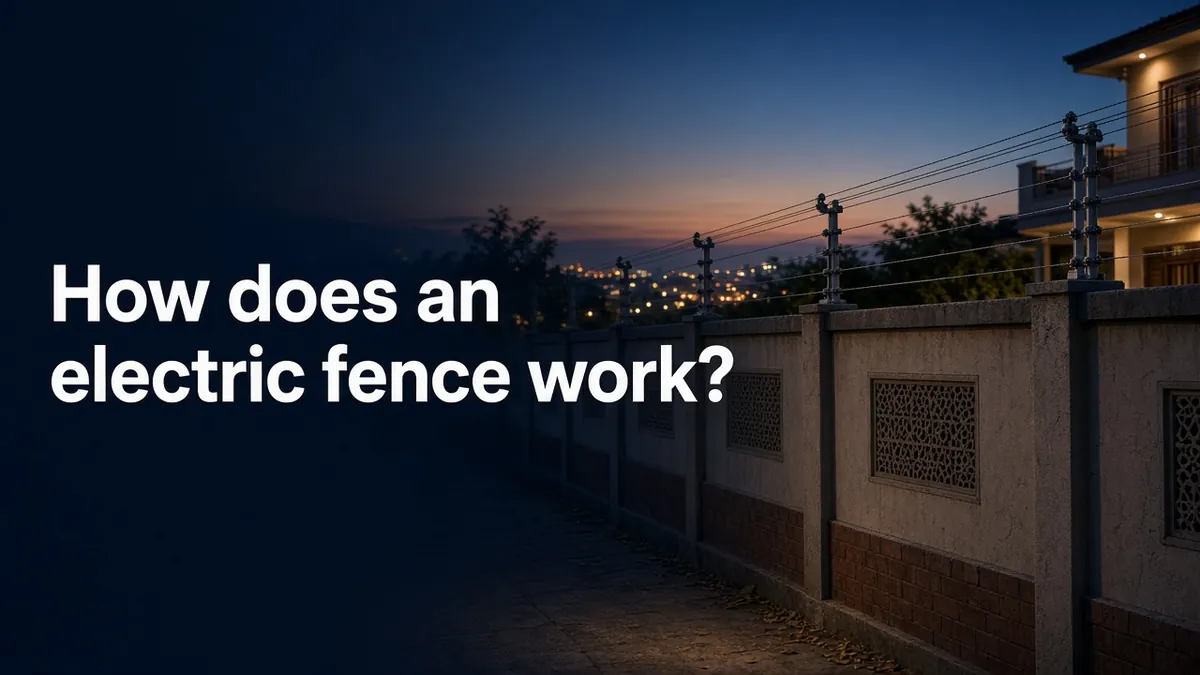
How an Electric Fence System Works on a Pakistani Boundary Wall
12 Sep 2026 · ~10 min read · Concord Technologies
An electric fence system on a home boundary wall is not a continuous live cable like people imagine from movies. It is a short, timed pulse of high voltage on wall-top wires, driven by an energizer, carried on rods and insulators, and completed through a proper earth. When someone climbs or cuts the line, they get a sharp shock and the system can raise an alarm. The goal is deterrence and early warning, not a farm animal fence and not barbed wire. You can see the full product approach on our wall-top electric fencing page. This article walks through how each part works so a survey conversation makes sense.
Most searches for how an electric fence works mix farm fencing with house security. In Pakistani cities the common install is a wall-top run: uprights on the parapet, several lines of high-tension wire, an energizer indoors or in a protected outdoor spot, and earthing rods at the building. People also call it electric safety wire, boundary wall electric fence, or wall security wire. The pieces are the same whether you are reading about homes in Lahore or elsewhere in Pakistan.
The energizer: the pulse that makes the fence live
The energizer is the heart of the system. It stores energy and releases it in short pulses along the fence wire. Between pulses the fence is not continuously live in the way a mains cable is. That pulsed design is why a correctly installed residential fence can deter a climber while still being designed around safety rules for people and pets near the wall. Searches like electric fence energizer, fence energizer, or electric fence controller are all pointing at this box.
Output has to match the perimeter. A short, clean rectangle needs less punch than a long, branched wall with many corners and gates. An undersized energizer can look fine on day one and feel weak after a few weeks of weather, vegetation touch, or small leaks at fittings. A stronger unit costs more to buy and to back up, but it is what keeps voltage honest on a real boundary. Brand families such as Nemtek and Tongher show up often in Pakistan because spare parts and support patterns are known, not because a badge alone makes a fence work.
Where the energizer sits matters. It needs dry, accessible mounting, a clean path for the high-voltage feed to the wall, and protection from casual tampering. Indoor plant rooms and covered outdoor niches are common. The feed wire from the energizer to the first insulator should be short, protected, and clearly separated from low-voltage control cables so the install stays tidy for later service.
Rods, wire, and insulators on the wall
Rods are the uprights fixed to the parapet. They space the wires away from the plaster and keep the geometry straight along the run. Powder-coated mild steel rods are common on mid-range homes. Stainless rods hold finish better where rain and city air would stain a light wall. Spacing depends on wall height, wind, and how many wire lines you run. Corners need proper termination so tension does not pull fittings crooked over time.
Wire is what carries the pulse. Alloy HT wire is widely used on residential wall-top systems when it is tensioned and terminated cleanly. Stainless wire costs more per metre and ages more evenly with stainless rods. Thickness, joins, and how the wire sits in the insulator decide whether the fence stays quiet or arcs and trips. Poor joins are a classic reason a new fence “feels weak” even when the energizer is fine.
Insulators keep live wire off the rod and the wall. If an insulator cracks, gets dirty with conductive dust, or is forced at the wrong angle, the pulse leaks to ground before it reaches the climber. That is why a careful install spends time on clean terminations, not only on stretching wire tight. Vegetation that grows into the lines does the same job as a bad insulator: it steals energy and can trigger nuisance alarms.
Earthing: the path that completes the circuit
Without a proper earth, the fence cannot shock as designed. The energizer returns through earth stakes driven into soil that stays reasonably moist, with clean connections back to the unit. Dry soil, painted stakes, shared rusty scrap, or a single shallow rod on a long perimeter are common shortcuts that show up later as soft shocks and confused fault finding.
Earthing is easy to skip on a cheap quote and expensive to fix after plaster and planting are finished. Ask how many earth stakes, where they sit, and how they are bonded. On a survey, a good team also checks whether underground pipes or other metalwork need to be kept clear of the earth path. This is one of the quiet differences between a kit that arrives in a box and a system that is built for the site. Real examples of finished runs are in our electric fence portfolio.
What happens when someone touches or cuts the fence
Contact with a live line delivers a sharp pulse that most people stop climbing after. The deterrent is immediate. Many systems also watch for a cut or short: if the wire opens or voltage collapses, the energizer or a linked monitor can sound a siren, flash a strobe, or push a phone alert depending on how the package was specified.
False alarms usually come from the physical install, not from “the software.” Branches, washing lines thrown over the wall, loose joins, wet debris on insulators, or a neighbour’s metal sheet touching a corner can all look like a fault. That is why handover should include a walk of the line and a plain explanation of what the beeps mean. After-sales visits often start with clearing a physical leak before anyone talks about replacing the energizer.
Load shedding and battery backup
A fence that dies with the grid only protects in daylight. In Pakistan, load shedding is part of the design talk. Battery backup keeps the energizer pulsing when mains drop. The backup size has to match how long outages run in your area and how large the fence is. A bigger perimeter draws more from the battery each pulse cycle, so backup is not a one-size accessory.
Ask how the system behaves in a long outage, not only whether “backup is included.” Some packages keep full voltage for a useful window. Others fade early. If night-time risk is why you searched electric fence near me or electric fencing system near me, backup and monitoring matter as much as the daytime look of the rods. We cover cost drivers separately in what drives electric fence cost in Pakistan, without turning this guide into a price list.
Gates, corners, and shared walls
Openings break the continuous run. Pedestrian gates and vehicle gates next to the fence line need planned isolation so the live wire does not arc onto moving metal. That planning is separate from automating the gate itself. If you are also looking at openers, see sliding gate motors and swing gate motors. Mixing the two jobs in one vague quote is how details get missed.
Corners and steps need extra hardware time. Every return changes tension. Shared boundary walls add politics as well as plaster quality: you need clear ownership of where rods sit and who maintains vegetation. Soft plaster, hollow sections, and decorative coping can force different fixings than a solid brick parapet. Photos help before a visit, but someone standing on the wall still sees what a phone camera hides.
Lahore homes and the same physics elsewhere
Electric fence Lahore searches are busy because societies such as DHA, Bahria, Gulberg, and Model Town have continuous boundary walls that suit wall-top systems. The physics do not change from city to city. Length, corners, energizer class, earthing, and backup still decide how the system behaves. For local install context, start with electric fencing in Lahore.
Outside Lahore, logistics and access affect schedule more than the basic parts list. Concord works across Pakistan from Plaza 180 in DHA Phase 8, Lahore, so out-of-city work is planned around survey and install access. Whether you call it electric fencing for home security or a boundary wall electric fence, you still need the same honest stack: energizer, rods, wire, insulators, earth, and a path for service.
Monitoring options sit on top of the basic loop. Some homes only need a local siren. Others want a phone notification when voltage collapses or a zone is cut. Monitoring does not replace clean hardware. If the wall-top run leaks energy into wet foliage, you will still get nuisance trips no matter how clever the app is. Treat monitoring as a messenger for a fence that already holds voltage, not as a fix for poor terminations.
Maintenance is mostly visual. Walk the line after storms, clear vines, and check that corner fittings still look true. If the energizer reports a fault and you can see nothing obvious, stop guessing with random wire joins and call the installer who knows the earth layout. Random DIY splices are a common way quiet fences become noisy ones.
What a good handover should teach you
You should leave knowing how to read the energizer lights, what to do if the siren sounds, and how to keep plants clear of the lines. You should also know where the manual isolation is if a contractor needs to work on the wall later. A system that only the installer understands will frustrate you the first time something beeps at midnight.
Before you book, it helps to write down:
- Rough wall length and number of main corners
- Whether you want powder-coated or stainless rods on street-facing sides
- Whether battery backup must cover long night outages
- Any shared walls or decorative coping that looks fragile
- Whether you already prefer a Nemtek or Tongher energizer family
Bring that list to the survey and you will spend less time on vague “premium” language and more time on parts you can name. When you are ready, request a quote and we will price from the wall, not from a generic kit description. Concord Technologies has been installing these systems for years across Pakistan, which is why we care as much about earthing and handover as about the look of the rods from the street.
Want the system explained on your wall?
Send a few photos of the boundary and tell us about outages in your area. We will walk you through energizer, rods, wire, and backup in plain language before anything is fixed.
Get a Free Quote Call +92 301 1111991Bottom line
A wall-top electric fence works as a pulsed high-voltage loop on rods and insulated wire, powered by an energizer and completed through a serious earth. Climbing or cutting triggers a shock and, on many systems, an alarm. Load shedding needs backup if night protection matters. Gates and corners need planned isolation. Brand choice affects parts and support, but layout quality decides whether the fence stays honest after the first rainy season. Use that map when you read any “how electric fence works” guide, then get a site survey so the design matches your boundary, not a farm fence diagram.
Related: Electric fence cost drivers · Wall-top electric fencing · Electric fencing in Lahore · Tongher · Nemtek · Contact · All blog posts